
Kashmiri Culture
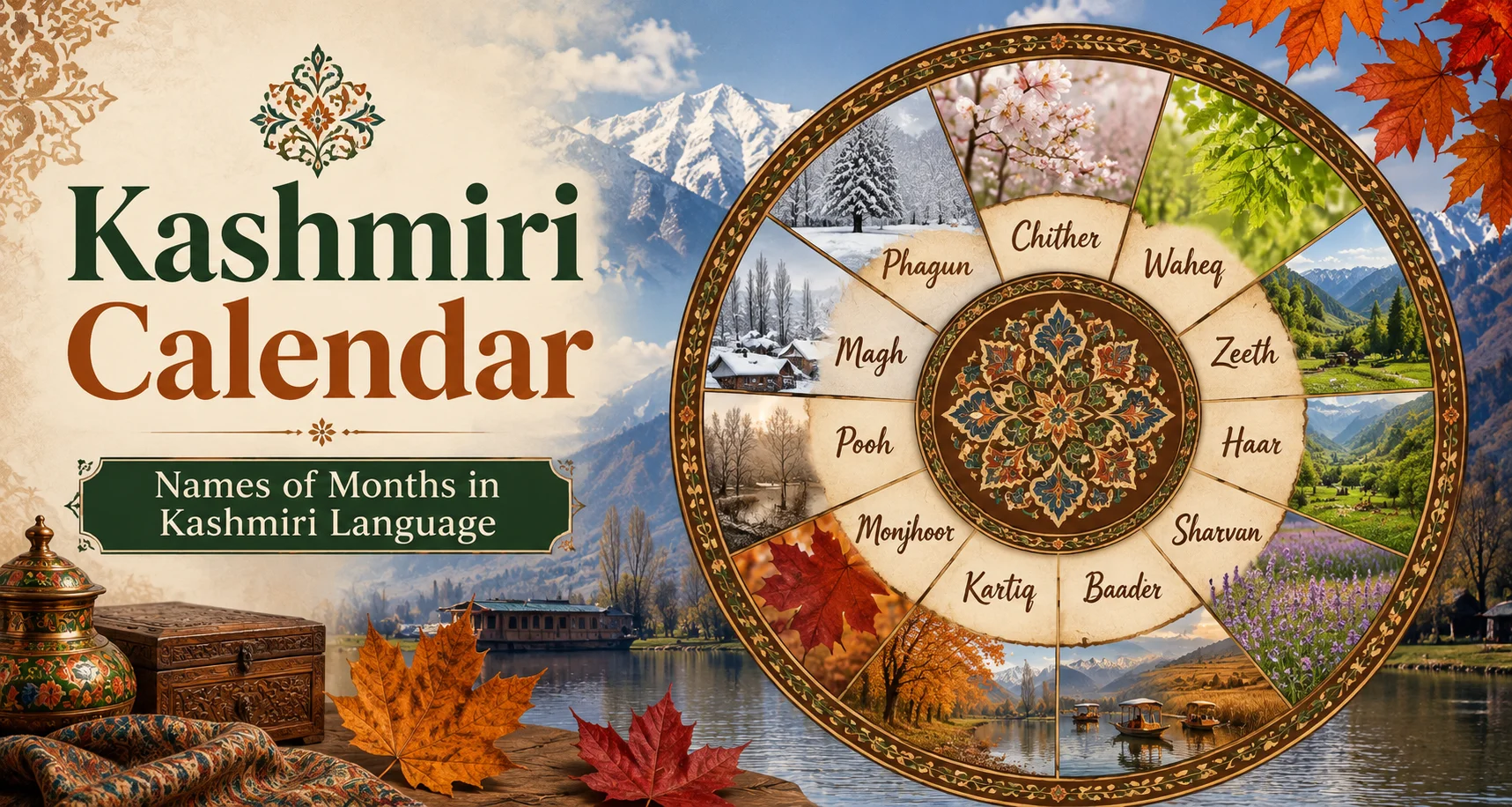
Names of Months in Kashmiri Language: Understanding the Kashmiri Calendar
May
The Kashmiri calendar is an important part of Kashmir’s cultural, spiritual, and agricultural heritage. For generations, people in Kashmir used this calendar to mark festivals, seasons, agricultural activities, and important religious occasions. Even today, in many old graveyards of Kashmir, tombstones carry dates of death written or inscribed according to the Kashmiri calendar.
Unlike the Gregorian calendar, which begins in January, the Kashmiri calendar traditionally follows the rhythm of seasons, nature, and local life. Each month has its own importance and is connected with the changing weather, farming cycles, and spiritual observances of Kashmir.
Kashmiri Months and Their Gregorian Calendar Period
| Kashmiri Month | Approx. Gregorian Period | Notes |
|---|---|---|
| Chither | March – April | First month of the Kashmiri calendar |
| Waheq | April – May | Associated with Soonth, spring, agriculture, and Nowroz |
| Zeeth | May – June | Early summer period |
| Haar | June – July | Important for the Urs of Hazrat Baba Naseeb-u-Din Gazi RA |
| Sharvun | July – August | Monsoon/summer period |
| Baader | August – September | Late summer/early autumn period |
| Aeshid | September – October | Autumn period |
| Kartiq | October – November | Late autumn period |
| Monjhoor | November – December | Beginning of winter |
| Pooh | December – January | Associated with winter solstice and the Urs of Sheikh Noor-U-Din Noorani RA |
| Magh | January – February | Named after the constellation Magha |
| Phagun | February – March | Last month of the Kashmiri calendar; derived from Phalguna |
Chither: The First Month of the Kashmiri Calendar
Chither, falling around March and April, is considered the first month of the Kashmiri calendar. It marks the beginning of a new cycle and comes at a time when the harshness of winter begins to fade. Nature starts showing signs of renewal, and Kashmir slowly moves towards the freshness of spring.
Waheq: The Month of Spring and Soonth
Waheq, which falls around April and May, holds special importance in the Kashmiri calendar. The sacred and important festival of Soonth, meaning spring, is celebrated during this month with joy and devotion in Kashmir.
Soonth is deeply connected with the arrival of spring and the renewal of life. This day is considered significant because the sun, after shining exactly over the equator, enters the northern hemisphere of the earth. Since Asia lies in this hemisphere, this shift becomes especially important for the people of Kashmir, particularly farmers and agricultural communities.
For Kashmiri peasants and agriculturalists, Soonth traditionally marked the beginning of major agricultural activities. It was a time when people prepared themselves for a new farming season. The Shia community in Kashmir also observes this day as Eid-e-Nowroz.
Another important religious occasion connected with this month is the Urs of Hazrat Zaina-u-Din Reshi RA, which is celebrated on the 12th of Waheq.
Zeeth: The Month of Early Summer
Zeeth, falling around May and June, comes as Kashmir moves from spring into early summer. The weather becomes warmer, and the valley begins to show a different charm. Orchards, fields, and gardens become full of life during this period.
Haar: A Month of Spiritual Importance
Haar, which falls around June and July, is another important month in the Kashmiri calendar. The Urs of Hazrat Baba Naseeb-u-Din Gazi RA is celebrated on the 14th of Haar.
This month comes during the summer season, when Kashmir is lush, green, and full of natural beauty.
Sharvun: The Summer Month
Sharvun, falling around July and August, is part of the warm summer period in Kashmir. Traditionally, this time was linked with agricultural growth and seasonal abundance. The fields and orchards remain active, and the natural landscape of Kashmir is at its peak.
Baader: Late Summer and Seasonal Change
Baader, which falls around August and September, represents the transition from summer towards autumn. In Kashmir, this is a time when the weather slowly starts changing. The valley begins preparing for the beautiful autumn season ahead.
Aeshid: The Autumn Month
Aeshid, falling around September and October, is connected with autumn in Kashmir. This is the season when the famous chinar leaves begin to change colour, and the valley takes on shades of gold, red, and brown.
For Kashmiris, autumn is not just a season; it is an emotion. Aeshid reflects this beautiful transformation in nature.
Kartiq: The Late Autumn Month
Kartiq, which falls around October and November, comes during late autumn. The air becomes colder, and Kashmir begins moving towards winter. Traditionally, this was the time when people prepared for the colder months ahead.
Monjhoor: The Beginning of Winter
Monjhoor, falling around November and December, marks the beginning of the winter period. The days become shorter, the temperature drops, and people in Kashmir start preparing for the intense cold that follows.
Pooh: The Month of Winter and Reflection
Pooh, falling around December and January, is one of the most significant winter months in the Kashmiri calendar. This month is associated with the winter solstice and is considered a suitable time for meditation, reflection, and spiritual thought.
A very important religious event connected with this month is the Urs of Hazrat Sheikh Noor-U-Din Noorani RA, also known as Nund Rishi. His Urs is traditionally celebrated on the 26th of Pooh according to the Kashmiri calendar.
Hazrat Sheikh Noor-U-Din Noorani RA holds a special place in Kashmir’s spiritual and cultural history. His teachings continue to inspire people across generations.
Magh: Named After the Magha Constellation
Magh, which falls around January and February, is named after the constellation Magha. It is one of the cold winter months of Kashmir. During this period, the valley often experiences harsh cold, snowfall, and the quiet stillness of winter.
Phagun: The Last Month of the Kashmiri Calendar
Phagun, falling around February and March, is the twelfth and last month of the Kashmiri calendar. The name is derived from the Sanskrit word Phalguna, which means “to flourish” or “to thrive.”
Phagun marks the end of the traditional Kashmiri year and prepares the way for the arrival of Chither, the first month. It is a time when winter slowly begins to loosen its grip and the valley looks forward to spring.
Cultural Importance of the Kashmiri Calendar
The Kashmiri calendar is much more than a system of counting days and months. It reflects the way Kashmiris understood time through nature, spirituality, agriculture, and community life.
From Soonth in Waheq to the Urs of Sheikh Noor-U-Din Noorani RA in Pooh, the calendar carries memories of Kashmir’s religious and cultural traditions. It also shows how deeply the people of Kashmir were connected with seasons, farming, and natural cycles.
Even today, the Kashmiri names of months remind us of an older and richer way of looking at time — one rooted in land, faith, and heritage.
Conclusion
The names of months in the Kashmiri language preserve a valuable part of Kashmir’s identity. They tell us about the valley’s seasons, its spiritual traditions, and its agricultural life. Knowing these names is not only important for language lovers, but also for anyone who wants to understand the cultural history of Kashmir.
The Kashmiri calendar continues to live through festivals, old inscriptions, religious observances, and oral traditions. By remembering these month names, we also keep alive a beautiful part of Kashmir’s heritage.
