
Kashmiri Culture
Why Your Kashmiri Yakhni Turns Watery — And How to Make It Thick, Creamy, and Wazwan-Like
May
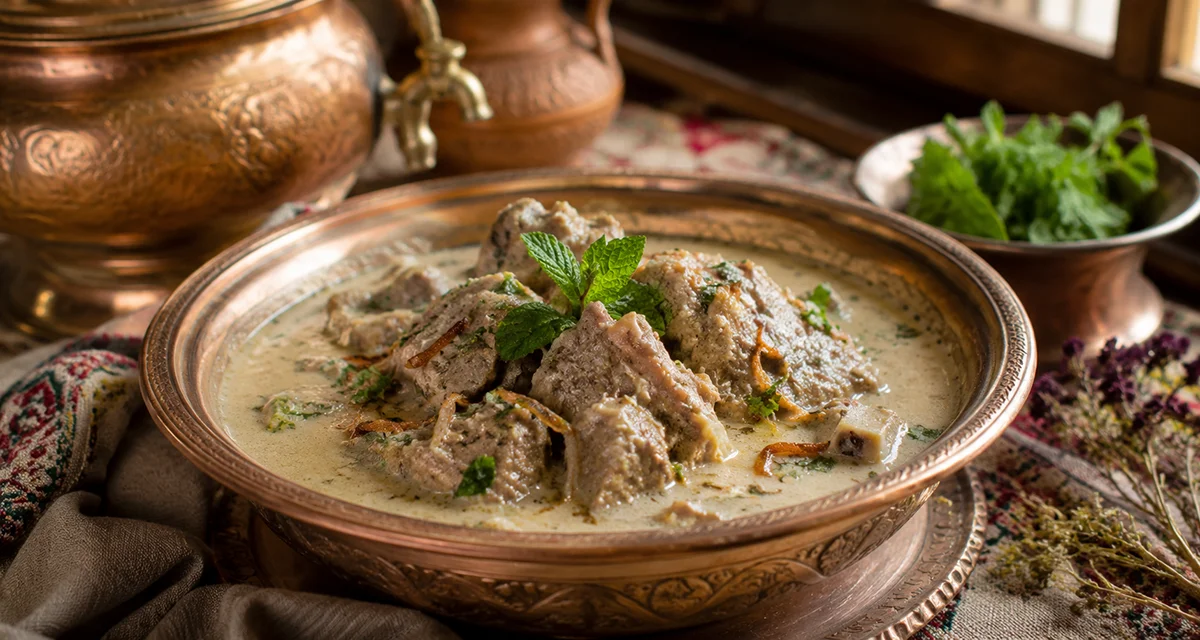
Kashmiri Yakhni is one of those dishes that looks simple but demands patience, balance, and the right technique. A good yakhni should be rich, creamy, aromatic, and gently thick — not watery, not curdled, and not overloaded with spices. Many home cooks face one common problem: the curd does not split, but the gravy still remains thin like soup.
This usually happens because of one main reason: too much mutton stock and too little curd.
In yakhni, yogurt is the heart of the dish. If the amount of stock is more than the curd, the gravy will naturally become watery. Even if you cook it for a long time, it may not reach that thick, creamy consistency unless the liquid is properly balanced.
Use More Curd and Less Stock
The most important rule is to keep the stock limited. When cooking mutton, add only enough water to cook the meat. The stock should not be much higher than the level of the mutton. If there is too much stock, strain it and add only what is needed.
Many experienced cooks suggest that curd should be used generously. For example, for 1 kg of mutton, using around 2 kg of thick curd can help create a richer and thicker yakhni. The curd should be more than the stock, not the other way around.
Boil the Curd Properly
One important step in making yakhni is boiling the curd correctly. Whisk the curd well before placing it on heat. Keep stirring continuously so it does not curdle. Once the curd comes to a proper boil, then it can be mixed with hot mutton and stock.
A useful tip is that both the curd and the mutton stock should be hot when combined. Adding cold curd to hot stock, or hot stock to cold curd, can disturb the texture.
Let It Reduce Slowly
Yakhni thickens with slow cooking. After adding the mutton and stock to the curd, let it simmer on low to medium heat. Do not rush this process. As the water evaporates, the gravy becomes thicker and the flavours become deeper.
If the mutton is already tender and you are afraid it will overcook, remove the mutton pieces and let only the gravy reduce. Once the gravy reaches the desired consistency, add the mutton back.
Add Fried Onion or Praan Paste
In many Kashmiri homes, fried onion paste or fried shallot paste, locally known as praan, is added to yakhni. It works as a natural thickening agent and also adds fragrance, richness, and depth to the dish.
For a lighter-coloured yakhni, the onions or shallots should be fried only until medium golden, not too dark. Then they can be ground into a smooth paste and added to the gravy.
Egg Can Help Stabilize and Thicken the Curd
Some cooks add one egg to the curd before boiling it. The egg should be whisked very well into the cold curd before placing it on heat. This helps give the curd a smoother, creamier body and can also help in thickening the gravy.
However, the egg must be mixed properly. If not whisked well, it may form small bits in the gravy.
Rice Flour or Cornflour as a Quick Fix
If the yakhni has already become watery, a small amount of rice flour or cornflour slurry can help thicken it. Mix rice flour or cornflour with a little water first, then add it slowly while the yakhni is boiling. Keep stirring to avoid lumps.
This should be used carefully. Too much flour can change the natural taste and texture of the yakhni.
Use Thick, Good-Quality Curd
The quality of curd also matters. Thin homemade curd can make the gravy watery. Thick, slightly sour curd works better for yakhni. Some cooks prefer market curd because it is often thicker and more consistent.
Before cooking, always whisk the curd until smooth. Lumpy curd can affect the final texture.
The Ideal Method for Thick Yakhni
Cook the mutton with whole spices and limited water until it is about 70% done. In a separate pot, whisk thick curd properly and bring it to a boil while stirring continuously. Once the curd boils, add the hot mutton and only the required amount of stock. Add fried onion or praan paste, then simmer everything on low to medium heat until the mutton becomes soft and the gravy thickens.
Finally, add crushed dried mint for aroma and fresh coriander while serving.
Conclusion
Watery yakhni is not a sign that you cannot cook well. It simply means the balance of curd, stock, and cooking time needs adjustment. Use more thick curd, keep the mutton stock limited, simmer patiently, and add fried onion or praan paste for body and flavour.
A perfect Kashmiri yakhni is not made in haste. It becomes beautiful when it is allowed to cook slowly, thicken naturally, and absorb the warmth of traditional Kashmiri cooking.
