
Kashmiri Culture
Machine Tilla vs Hand Tilla: Are We Making Kashmiri Craft More Accessible—or Erasing It?
Aug
A recent discussion about machine-made Tilla work has raised an uncomfortable but necessary question: should Kashmiris boycott machine Tilla to protect the centuries-old tradition of authentic hand Tilla?
For some, machine Tilla is a practical and affordable alternative. For others, its growing popularity threatens the livelihoods of Kashmiri artisans and gradually reduces a living cultural tradition to a mass-produced design.
The issue, however, is more complex than a simple contest between machines and hands.
Hand Tilla Is More Than Embroidery
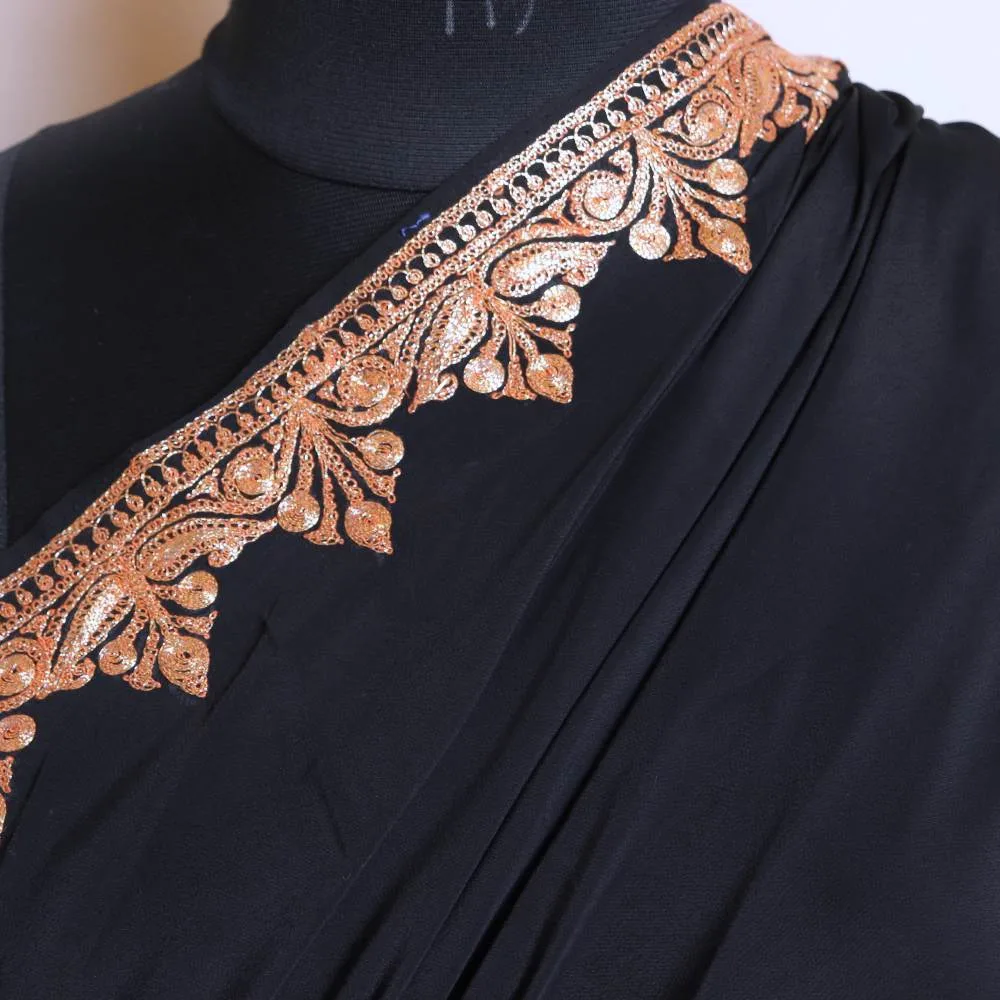
Traditional Kashmiri Tilla embroidery is distinguished by its metallic gold- or silver-coloured thread, carefully worked by hand into elaborate patterns. It has long adorned pherans, shawls and ceremonial garments, particularly those worn at weddings and other important occasions.
Every hand-embroidered piece represents hours—sometimes months—of skilled labour. The artisan must control the placement of the thread, maintain the flow of the pattern and secure every detail with precision. The slight variations found in handmade work are not flaws; they are evidence of the human hand behind the garment.
This knowledge has been passed from one generation of Kashmiri artisans to another. Buying an authentic hand Tilla piece therefore supports more than a product. It supports a craftsperson, a family, a livelihood and the continuation of Kashmir’s cultural inheritance.
A machine may reproduce the shine and outline of a traditional motif, but it cannot reproduce the labour, skill and human story stitched into an original piece.
Why Machine Tilla Has Become Popular
The rise of machine embroidery cannot be explained only as cultural indifference. Authentic hand Tilla is expensive, and the price reflects the cost of skilled labour, the material used and the time required to complete it. A heavily embroidered outfit can take several months to finish and may remain beyond the budget of many households.
Machine-made garments, meanwhile, can be produced quickly, purchased immediately and offered at comparatively accessible prices. For someone who wants the appearance of Tilla for an occasion but cannot afford extensive handwork, machine embroidery provides an alternative.
That choice does not necessarily mean the customer dislikes or disrespects Kashmiri craftsmanship. In many cases, affordability and availability—not a lack of appreciation—determine the purchase.
Culture should not become something that only wealthy consumers can wear. Machine-made interpretations can make traditional Kashmiri design more widely accessible, provided they are sold honestly.
The Real Problem Is Misrepresentation
Machine Tilla is not automatically counterfeit. It becomes deceptive when it is presented or priced as authentic Kashmiri hand embroidery.
Customers are frequently shown garments described simply as “Tilla work,” without being told whether the embroidery was completed by hand or machine. In some cases, even the metallic material used is not traditional Tilla but an ordinary zari or dori chosen to imitate its appearance.
There are also concerns about garments manufactured outside Kashmir being sold as Kashmiri handicrafts. Products made in industrial units in places such as Ludhiana or Surat may use Kashmiri motifs, but that alone does not make them Kashmiri handmade products. When their actual origin and production method are concealed, customers are misled and local artisans are forced to compete with factories capable of producing hundreds of pieces at a fraction of the time and cost.
The contradiction becomes even sharper when brands sell machine-embroidered outfits at premium prices. If machine production is defended on the grounds of affordability, why are some machine-made garments priced at ₹25,000 or more? Such pricing often benefits the label far more than either the customer or the Kashmiri artisan.
Clear labelling is therefore essential. Every garment should disclose:
- Whether the embroidery is handmade, machine-made or a combination of both
- Whether genuine Tilla thread or an imitation zari or dori has been used
- Where the garment and its base fabric were produced
- Whether the embroidery was completed by Kashmiri artisans
- What type of fabric has been used
This would allow customers to compare products fairly and understand why two apparently similar garments may have vastly different prices.
Machine Work Should Not Borrow the Value of Handwork
The danger is not simply that machine Tilla exists. The danger is that it borrows the reputation of authentic hand Tilla while removing the artisan from the product.
When both are marketed under the same name, customers begin to evaluate handmade embroidery using machine-made prices. A carefully embroidered garment may then appear “overpriced” beside a mass-produced imitation, even though the two have little in common in terms of labour, material or cultural value.
This price comparison discourages artisans and ethical designers who work with locally woven fabrics and genuine hand embroidery. If skilled craftspeople cannot earn a dignified income, fewer young people will choose to learn the craft. Once that chain of transmission breaks, reviving it becomes extremely difficult.
Kashmir has already witnessed similar pressures across Sozni, Aari, carpet weaving and other traditional crafts. Computerised patterns can reproduce the visible surface of a design, but they cannot preserve the community of knowledge behind it.
Preservation Does Not Require an Absolute Boycott
A total boycott of machine Tilla may be neither practical nor fair. Not every customer can afford hand embroidery, and not every garment needs to be an heirloom piece.
A more constructive approach would be to establish two distinct and honestly represented categories. Machine Tilla can exist as an affordable, fashion-oriented product, clearly labelled as machine-made. Hand Tilla should be protected and promoted as an artisanal Kashmiri craft whose price reflects genuine skill and labour.
Consumers who cannot afford heavy hand embroidery can consider minimal hand Tilla work instead of choosing elaborate machine embroidery. A simple, authentic border or neckline may support an artisan while remaining more attainable. As one sentiment from the discussion aptly suggests: even if the work is less, let it be the work of the hand.
Those who can afford authentic handwork should consciously commission it, wear it on important occasions and pass it on to the next generation. Buyers should also ask questions, verify claims and support businesses that work transparently with Kashmiri artisans.
The Way Forward
Protecting hand Tilla requires shared responsibility.
Artisans must receive fair wages and recognition. Designers and sellers must disclose materials and production methods honestly. Government and industry bodies should introduce credible certification and traceability. Customers must learn to distinguish handmade work from machine embroidery and understand what they are paying for.
Most importantly, Kashmir must stop allowing factory-made imitation to define the market value of its handmade heritage.
The choice need not be between making culture affordable and preserving authenticity. Both machine-made and handmade garments can have a place in the market—but they must not be presented as the same thing.
Machine Tilla may offer speed, symmetry and accessibility. Hand Tilla carries something fundamentally different: the touch of an artisan, the memory of generations and a piece of Kashmir’s living identity.
If we fail to recognise that difference today, we may eventually be left with the patterns—but lose the people and traditions that gave those patterns meaning.
