
Kashmiri Online Shopping
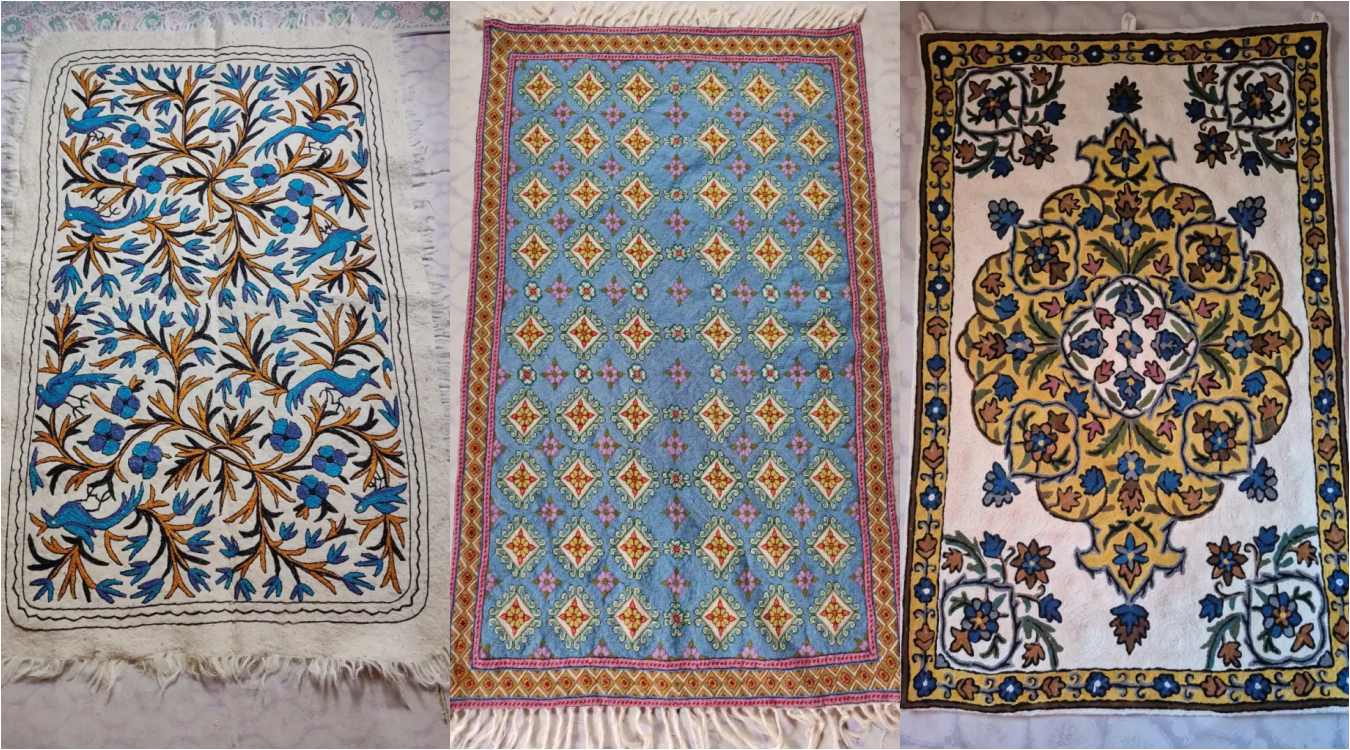
Traditional Floor Coverings from Kashmir
Jul
Before the chair arrived in Kashmir, the floor was everything.
For generations, the floor was where life naturally came together in Kashmiri homes.
Meals were shared there, guests were welcomed, prayers were offered, and children spent hours playing or sleeping beside their families. It was never just an empty space inside the house. Every floor covering added warmth, comfort, and a quiet sense of hospitality.
This tradition gave rise to some of Kashmir’s finest floor crafts. Each one tells a different story through its material and making. The soft felted namda, the colourful recycled gabba, and the richly embroidered chainstitch rug and handmade carpets all reflect the creativity of Kashmiri artisans. Together, they show how even the floor became a place for craftsmanship, tradition, and everyday beauty.
Namda: The Felt That a Community Makes Together
Ask any Kashmiri artisan about a namda, and warmth is often the first thing they mention. The second is the people behind it.
Unlike many other crafts, a namda is never the work of one artisan alone. Different craftsmen take part in different stages, each adding their own skill before the rug is finally complete. It is a craft built on teamwork as much as tradition.
The journey begins with locally sourced wool, carefully cleaned and spread over a woven base called the waghu. Handmade soap, hot water, and continuous rolling help bind the fibres together until they form a dense sheet of felt.
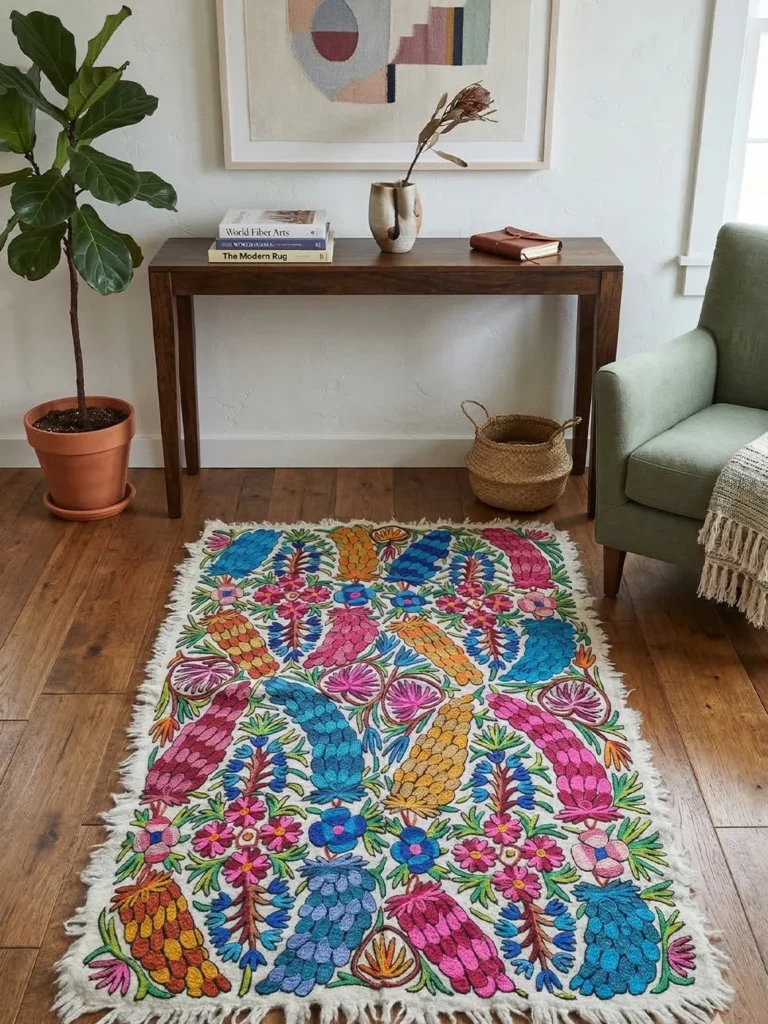
Once the felt is ready, traditional designs are transferred onto the surface using wooden molds. Skilled embroiderers then decorate the rug with colourful chain-stitch embroidery, creating floral, bird, and nature-inspired motifs that have become a signature of Kashmiri namdas. These designs reflect the valleys, gardens, and landscapes that surround the artisans every day.
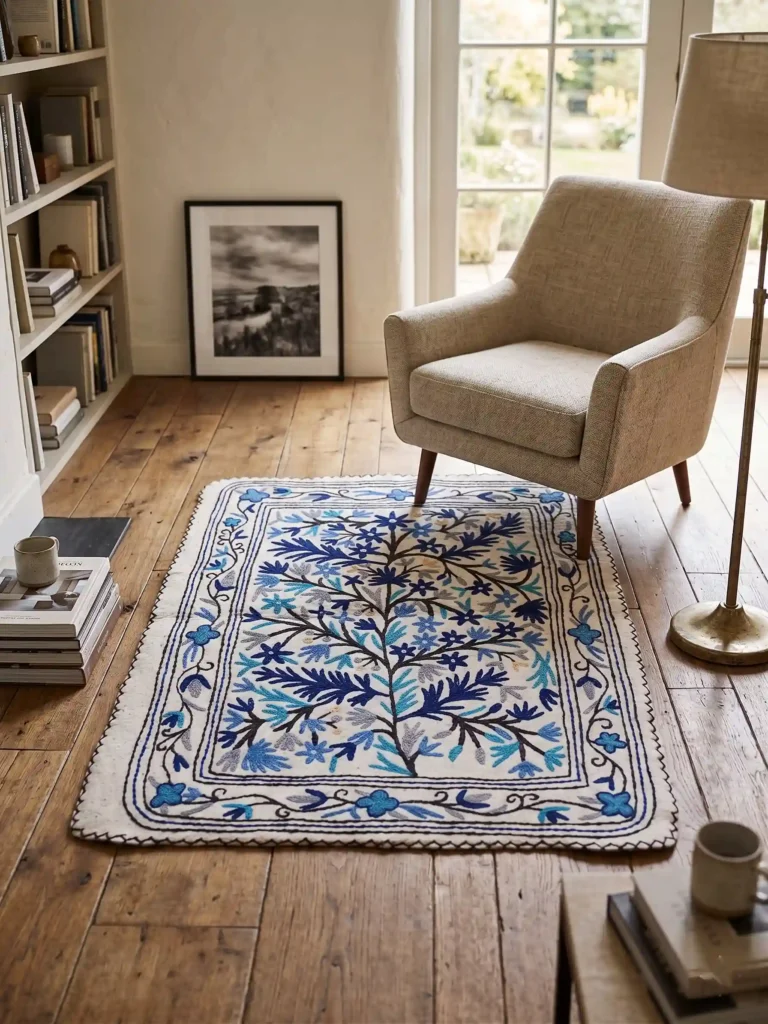
The finished rug is then washed and prepared before reaching its final form. One of the qualities people appreciate most is that a namda becomes softer with regular use, making it both beautiful and comfortable for everyday living.
Namdas first gained international recognition during the World Wars, when foreign soldiers travelling through Kashmir discovered their warmth and durability. Over time, they became known far beyond the valley for their unique craftsmanship.
Gyawun offers a huge variety of handmade namda rugs in circular, oval, and rectangular shapes, ranging from 2 feet to 10 feet. Each one features traditional hand Aari embroidery and is carefully made in Kashmir before being dispatched from Srinagar.
Shop Kashmiri Namda Rugs
Gabba: Ingenuity from Old Blankets
The story of the gabba begins with an old woollen blanket rather than a new piece of fabric.
Instead of throwing away worn blankets, Kashmiri artisans found a way to give them a completely new purpose. Pieces of wool were carefully cut, arranged, and stitched together to create floor coverings that were both practical and decorative. What began as a simple solution gradually became one of Kashmir’s most distinctive crafts.
Over time, the gabba earned royal patronage during the reign of Maharaja Ranbir Singh, who introduced these beautifully embroidered rugs into royal interiors. Traditional ari chain-stitch embroidery added another layer of craftsmanship, with familiar Kashmiri designs such as chinar leaves, lotus flowers, birds, and garden-inspired patterns decorating the surface.
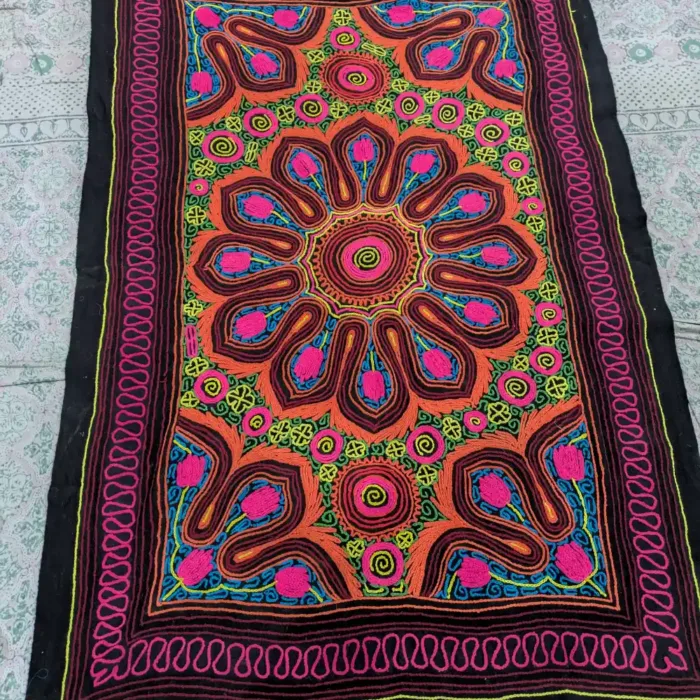
One of the best-known gabba patterns is the dal-guldar, recognised for its central floral design surrounded by balanced decorative borders. Today, embroidered gabbas are mainly crafted in Anantnag, while printed gabbas continue to be a speciality of Baramulla.
The beauty of a gabba lies not only in its embroidery but also in the idea behind it. Something once considered old is transformed into a handmade piece that carries both creativity and tradition.
Shop Kashmiri Gabba Rugs
Handmade Kashmiri Carpets: Knot by Knot, a Garden on the Floor
A handmade Kashmiri carpet is one of the valley’s most detailed crafts. Every carpet begins with a naqash, the master designer who creates patterns inspired by Kashmir’s gardens, flowers, birds, and traditional borders before the weaving even begins.
The design is then converted into a taleem, a traditional coded guide that tells the weaver exactly which colour and how many knots to weave. Working on a cotton base, skilled artisans tie each knot by hand using hand-dyed wool. Depending on the size and design, completing a single carpet can take several weeks or even months.
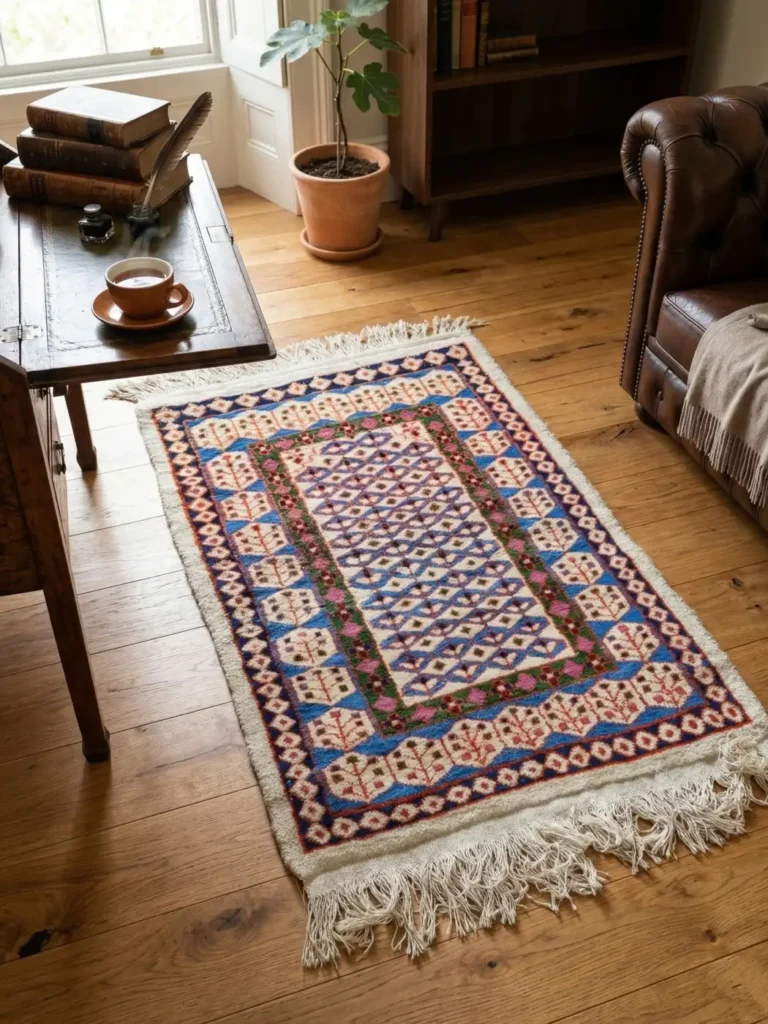
The result is a carpet with remarkable depth, texture, and detail. Every floral pattern and decorative border is created knot by knot during weaving rather than being printed or added later. This careful process gives handmade Kashmiri carpets their distinctive appearance and lasting beauty.
More than a floor covering, a handmade carpet becomes a part of the home. It brings together traditional craftsmanship, timeless design, and the artistry that has made Kashmiri carpets admired around the world.
Shop Kashmiri Handmade Carpets
Chain Stitch Carpets: The Needle’s Long Conversation with the Floor
The chain stitch carpet beautifully brings together Kashmir’s embroidery traditions and its floor craftsmanship. The process begins with a dusoot cotton base. Wool or silk thread is carefully stitched into the fabric using continuous chain stitches, gradually building the design one section at a time. Thousands of these stitches come together to create a slightly raised surface that feels soft underfoot while adding depth to the patterns.
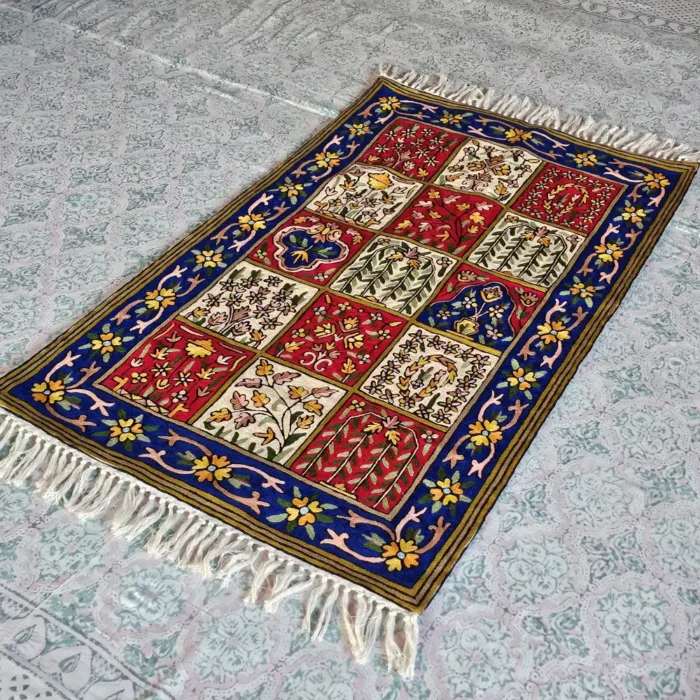
Traditional floral motifs, vine borders, and chinar leaves are first drawn by the naqash before skilled embroiderers begin their work. Hand-dyed wool adds colour to every section, and once the embroidery is complete, the carpet is backed, washed, and carefully finished before leaving the workshop.
Shop Kashmiri Chain Stitch Carpets
The namda, the gabba, carpet and the chain stitch rug are made using different materials and different techniques, yet all these floor coverings from Kashmir carry the same purpose. They bring a small part of Kashmir’s beauty indoors, adding warmth, tradition, and handmade craftsmanship to the spaces where families gather every day.
Browse the full collection of Kashmiri Namda rugs, Gabba floor coverings, handmade carpets and chain stitch rugs on Gyawun — each piece handmade in Kashmir, dispatched from Srinagar.
